
NVIDIA RTX Spark and the Rise of AI-Native Laptops in 2026
Blog post desHow NVIDIA's New Architecture Could Transform Local AI Computing Artificial intelligence has spent the last several years living primarily in the cloud. Whether generating images, writing code, analyzing data, or powering intelligent assistants, most AI workloads have depended on massive data centers filled with specialized hardware.cription.
ARTIFICIAL INTELLIGENCE
Staff
6/2/20263 min read
How NVIDIA's New Architecture Could Transform Local AI Computing
Artificial intelligence has spent the last several years living primarily in the cloud. Whether generating images, writing code, analyzing data, or powering intelligent assistants, most AI workloads have depended on massive data centers filled with specialized hardware.
In 2026, NVIDIA is taking a major step toward changing that model.
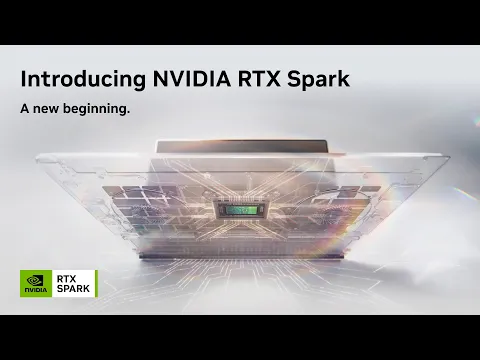
With the introduction of the new NVIDIA RTX Spark platform and a growing lineup of AI-focused laptops from manufacturers including Dell Technologies, Lenovo, HP Inc., ASUS, MSI, and Microsoft, the company is positioning AI to run directly on personal devices rather than relying entirely on cloud infrastructure. The result could be one of the most significant shifts in personal computing since the introduction of the smartphone.
What Is NVIDIA RTX Spark?
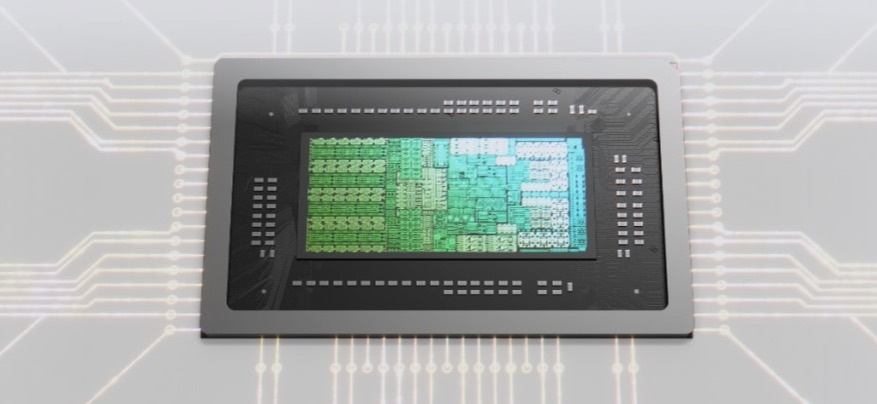
RTX Spark is NVIDIA's new AI-focused system-on-chip (SoC) designed specifically for next-generation laptops and compact desktop systems. Unlike traditional PC processors that separate the CPU, GPU, and AI acceleration hardware, RTX Spark combines these components into a tightly integrated architecture optimized for artificial intelligence workloads.
The platform is built around:
A 20-core NVIDIA Grace CPU
A Blackwell-based RTX GPU
Fifth-generation Tensor Cores
Unified memory architecture
Up to 1 petaflop of AI processing performance
Support for as much as 128GB of unified memory
This architecture traces its roots to the earlier NVIDIA DGX Spark personal AI supercomputer, a desktop system designed to bring data-center-class AI performance directly to developers and researchers.
Why Local AI Matters
For years, users have become accustomed to sending prompts, files, and data to cloud services for processing. While cloud AI remains incredibly powerful, it introduces several limitations:
Internet dependency
Subscription costs
Data privacy concerns
Latency delays
Bandwidth requirements
Local AI changes the equation.
Instead of transmitting data to remote servers, AI models run directly on the device. This approach allows users to interact with intelligent systems even when offline while maintaining complete control over sensitive information.
For businesses working with confidential documents, healthcare information, intellectual property, or proprietary research, local AI could become a critical competitive advantage.
Running Larger AI Models at Home
One of the biggest challenges in local AI computing has always been memory.
Many advanced language models require enormous amounts of memory to load and operate efficiently. Traditional laptops often struggle to run anything beyond small AI models.
RTX Spark addresses this limitation through its unified memory architecture. NVIDIA claims the platform can support local AI workloads involving models with well over 100 billion parameters, while the DGX Spark platform has demonstrated support for models approaching 200 billion parameters.
This opens the door for:
Large language models
AI coding assistants
Multimodal AI systems
Private enterprise AI agents
Research and development workloads
Fine-tuning custom models locally
For developers and AI enthusiasts, that means fewer compromises and less dependence on expensive cloud GPU rentals.
Personal AI Agents Become Practical
Perhaps the most exciting aspect of RTX Spark is its focus on AI agents.
Unlike traditional chatbots, AI agents can perform multi-step tasks, interact with software, automate workflows, and make decisions based on user goals.
NVIDIA is positioning RTX Spark as a platform designed specifically for these next-generation intelligent assistants. The company has highlighted local AI agents capable of:
Managing schedules
Conducting research
Automating repetitive workflows
Assisting with software development
Creating content
Interacting directly with applications on the user's computer
Because these agents run locally, users gain additional privacy, lower latency, and greater control over how their data is used.
A Major Benefit for Content Creators
The implications extend far beyond AI developers.
Content creators, animators, designers, and video professionals may see significant advantages from the new architecture.
NVIDIA claims RTX Spark-powered systems can handle demanding creative workloads, including large 3D scenes, AI-assisted rendering, video editing, and advanced generative tools. Adobe and other software developers are already optimizing applications for the new platform.
For professionals working in 3D visualization, animation, and digital content production, local AI acceleration could dramatically reduce the time needed for tasks such as:
Asset generation
Scene optimization
Video enhancement
Motion graphics creation
Automated editing
AI-assisted design workflows
What This Means for the Future of AI PCs
The launch of RTX Spark signals a broader industry trend: AI is becoming a core feature of personal computers rather than an external service.
Just as GPUs transformed gaming and creative applications, AI-specific hardware may soon become a standard expectation for laptops and workstations.
Over the next few years, we are likely to see:
More powerful local AI assistants
Reduced reliance on cloud-based AI subscriptions
Better privacy for sensitive workloads
Faster AI response times
New categories of AI-native software
Increased productivity for creators and professionals
The traditional PC is evolving into an intelligent computing platform capable of understanding context, automating tasks, and assisting users in real time.
Final Thoughts
NVIDIA's RTX Spark platform and upcoming generation of AI-focused laptops represent more than just another hardware upgrade. They mark a shift toward a future where advanced AI runs directly on personal devices.
For developers, creators, researchers, and businesses, the ability to execute large AI models locally could unlock new levels of privacy, speed, and flexibility. While cloud AI will continue to play an important role, RTX Spark demonstrates that the next chapter of artificial intelligence may be much closer than many expected—running right on the laptop sitting on your desk.
As 2026 unfolds, AI-native PCs powered by NVIDIA's Grace and Blackwell architecture may become the foundation for a new era of personal computing.
Connect
Engaging storytelling through immersive media solutions.
contactus@lm3official.com
+1234567890
© 2026. All rights reserved.

services