
NVIDIA DLSS 5: A New Era of AI-Driven Graphics
NVIDIA has once again pushed the boundaries of real-time graphics with the unveiling of DLSS 5, its most ambitious leap in visual technology since the introduction of real-time ray tracing. Announced at GTC 2026, this new generation of Deep Learning Super Sampling signals a major shift—from traditional rendering pipelines toward fully AI-assisted image creation.
TECH
Staff
3/17/20263 min read
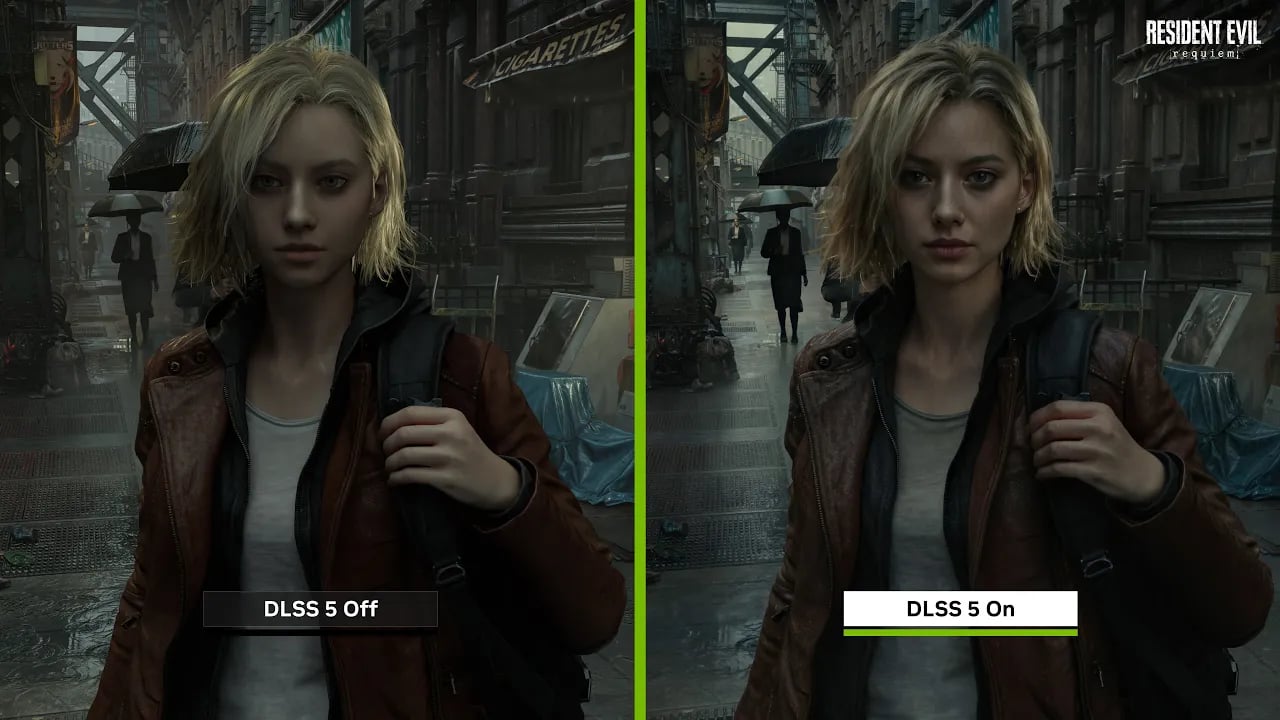
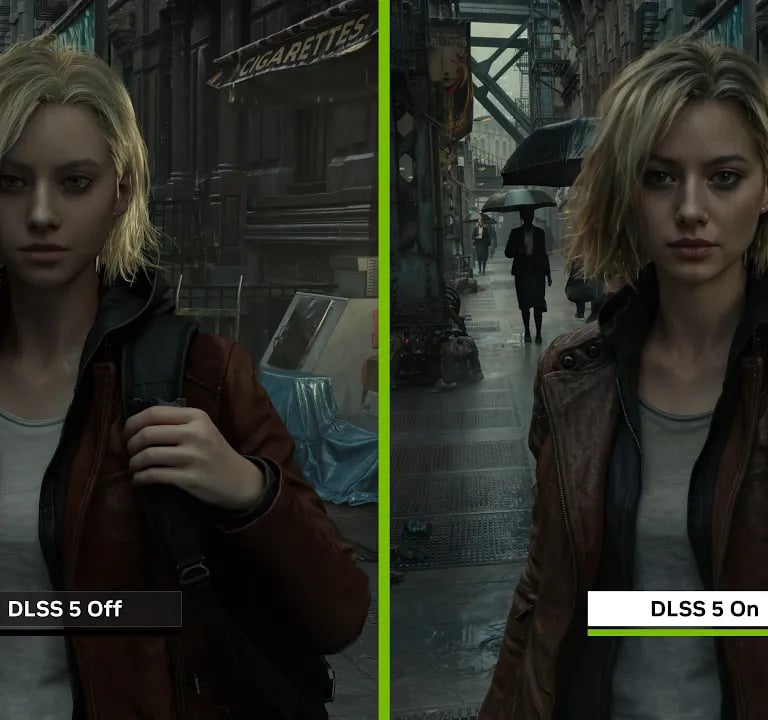
What Is DLSS 5?
DLSS (Deep Learning Super Sampling) has long been NVIDIA’s AI-powered solution for boosting performance while maintaining high image quality. Earlier versions focused primarily on upscaling resolution and generating frames.
DLSS 5, however, goes much further.
At its core is a real-time neural rendering model that doesn’t just upscale images—it reconstructs and enhances them with photorealistic lighting and materials.
This means the AI is no longer just filling in missing pixels—it’s actively shaping how scenes look, bringing them closer to cinematic realism.
The “GPT Moment” for Graphics
NVIDIA CEO Jensen Huang described DLSS 5 as a “GPT moment for graphics,” highlighting its shift toward generative AI in rendering.
Instead of relying purely on handcrafted techniques, DLSS 5 blends:
Traditional rendering pipelines
AI-driven neural enhancements
The result is a hybrid approach that bridges the gap between real-time graphics and Hollywood-level visual effects.
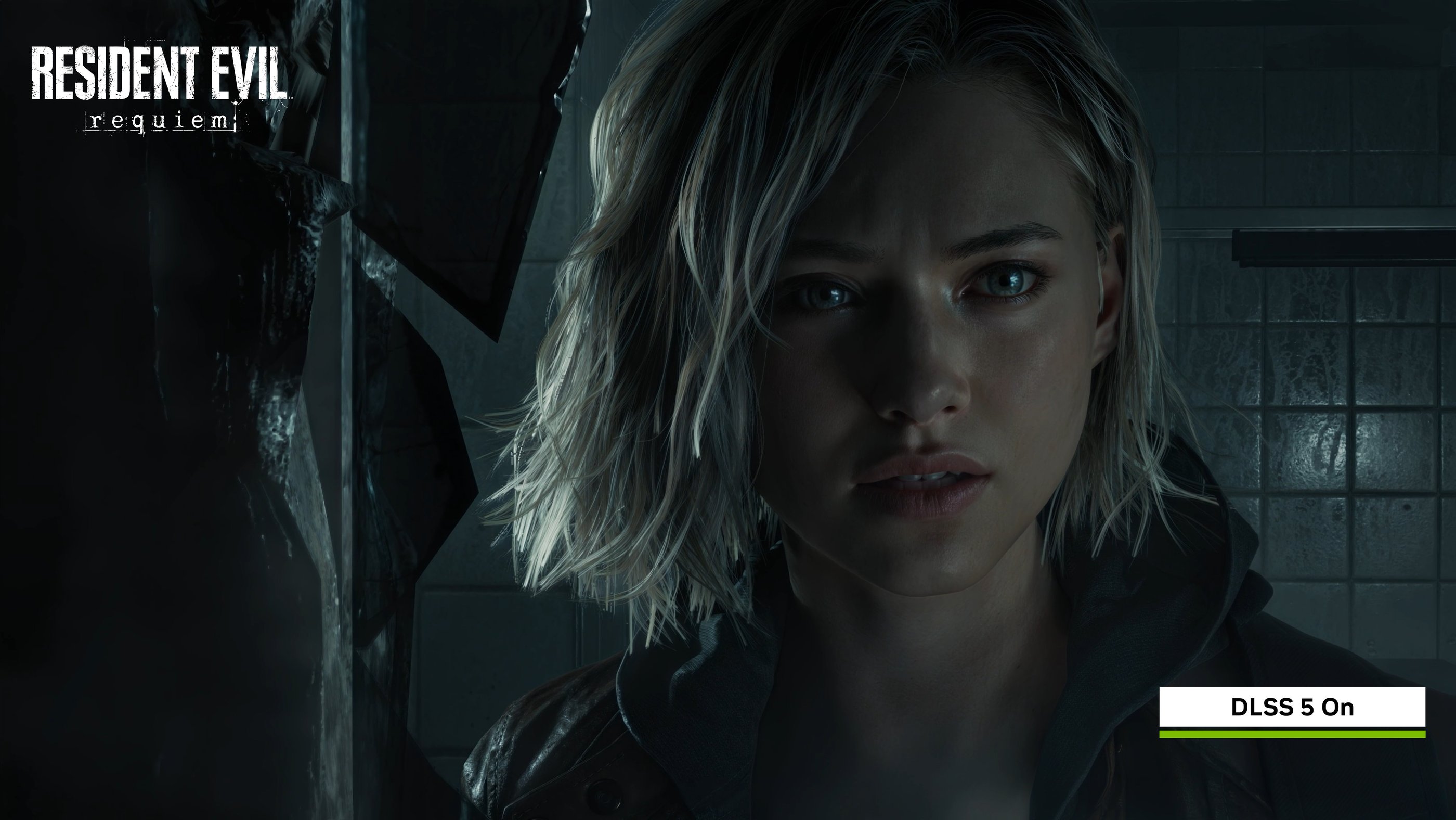
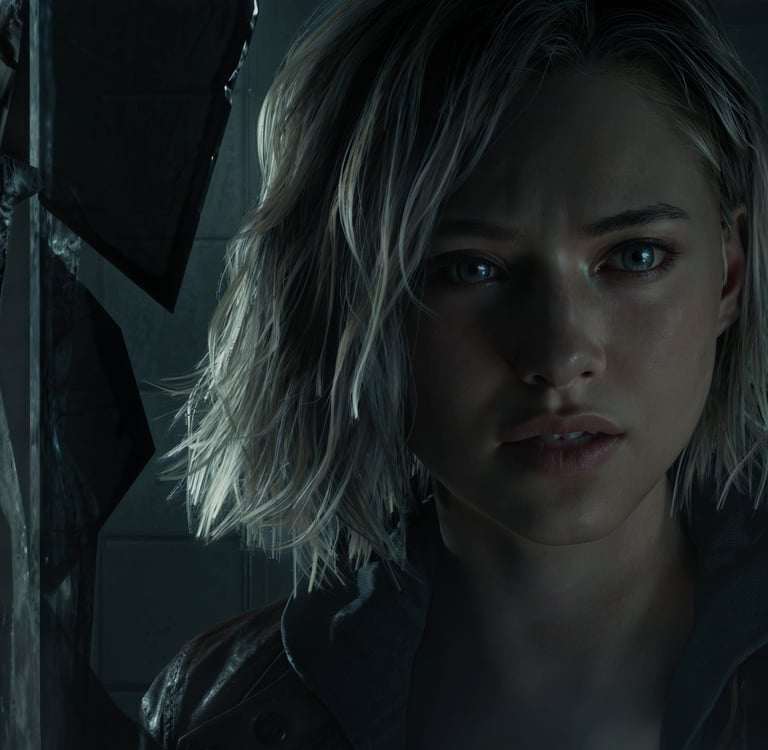
Key Features of DLSS 5
1. Neural Rendering in Real Time
DLSS 5 processes each frame using:
Color data
Motion vectors
It then applies AI-generated lighting and material properties that remain stable and consistent across frames.
This ensures:
No flickering or instability
Cohesive lighting across motion
More lifelike surfaces and reflections
2. Photoreal Lighting & Materials
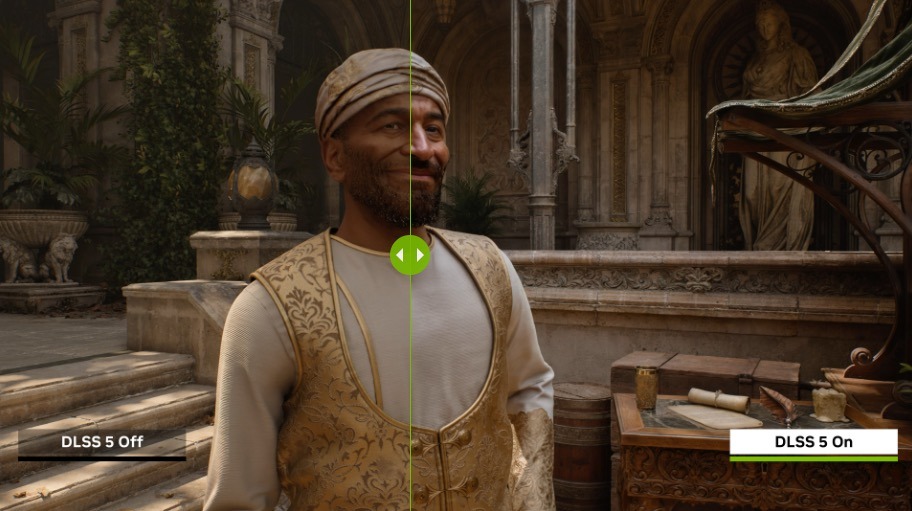
Unlike previous DLSS versions, which improved clarity, DLSS 5 adds new visual information:
Realistic shading
Advanced surface textures
Physically convincing lighting
This effectively “upgrades” a game’s visual fidelity beyond what was originally rendered.




DLSS5 Off
DLSS5 On
3. Artist Control and Customization
Despite heavy AI involvement, NVIDIA emphasizes that developers remain in control.
Studios can:
Adjust intensity, contrast, and color grading
Mask specific areas from enhancement
Fine-tune how AI is applied
This ensures that the original artistic vision is preserved, rather than overridden.
4. Real-Time Performance at High Resolutions
DLSS 5 is designed to run in real time at up to 4K, maintaining smooth gameplay while applying these complex enhancements.
This is critical—because visual upgrades are only meaningful if performance remains playable.
Industry Adoption
DLSS 5 is already gaining strong support across the gaming industry. Major publishers and studios expected to integrate the technology include:
This suggests DLSS 5 could quickly become a standard feature in AAA titles.
Release Timeline
DLSS 5 is scheduled to launch in Fall 2026, likely alongside next-generation GPU optimizations and broader developer integration.
Early Reactions and Concerns
While the technology is groundbreaking, not all reactions have been purely positive.
Some critics argue that:
AI-generated visuals could lead to a “homogenized” look across games
Overuse of AI enhancement may blur artistic identity
These concerns echo broader debates around generative AI in creative industries.
Why DLSS 5 Matters
DLSS 5 represents a fundamental shift in how graphics are created:
From:
Rendering every pixel manually
To:
Letting AI generate and enhance visual detail dynamically
This could:
Reduce the workload on developers
Enable richer, more immersive worlds
Redefine the balance between performance and realism
Final Thoughts
DLSS 5 isn’t just an upgrade—it’s a reimagining of the rendering pipeline itself. By combining traditional graphics techniques with generative AI, NVIDIA is moving closer to a future where real-time graphics rival pre-rendered cinematic visuals.
Whether it becomes the new standard or sparks industry debate, one thing is clear:
the line between real-time rendering and reality is getting thinner than ever.
Connect
Engaging storytelling through immersive media solutions.
contactus@lm3official.com
+1234567890
© 2026. All rights reserved.

services