
Beyond the Green Screen: The Real-Time Revolution of Virtual Production
For decades, the "magic" of cinema happened in the dark. Actors stood in cavernous, neon-green rooms, staring at tennis balls taped to tripods, while directors asked them to imagine they were standing on the edge of a volcanic crater or floating in the depths of space. The world we saw on screen was constructed months later by thousands of artists in post-production—a process that was as expensive as it was disconnected. But the industry is currently undergoing a seismic shift. We are entering the era of Virtual Production (VP), and it is fundamentally rewriting the rules of filmmaking.
VFX
Staff
5/11/20263 min read
What Exactly is Virtual Production?
At its simplest, Virtual Production (VP) is the integration of real-time game engine technology with physical film production. While "virtual" is in the name, the experience is incredibly tangible.
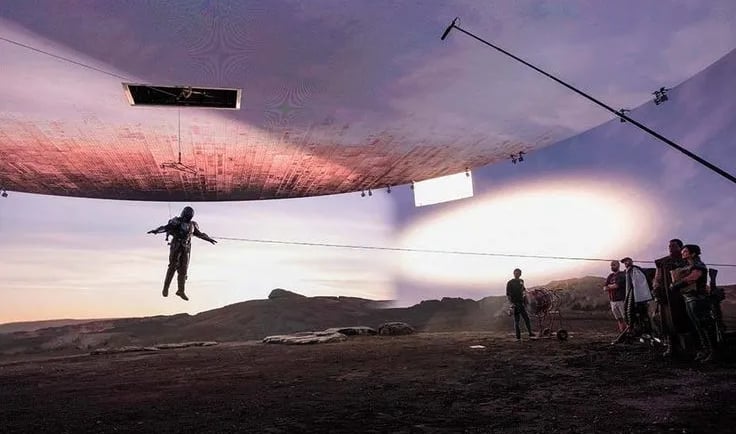
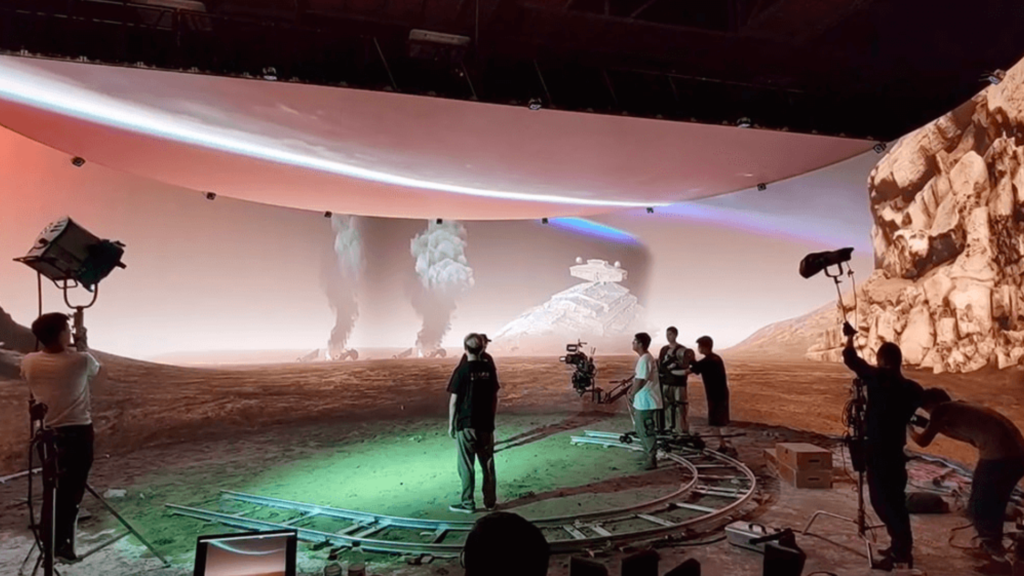
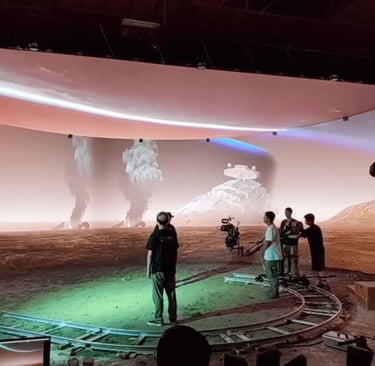
The centerpiece of modern VP is the LED Volume—a massive, wrap-around screen that displays high-resolution 3D environments rendered in real-time (usually via Unreal Engine or Unity). Instead of a green screen, actors are immersed inside the digital set. When the camera moves, the background shifts in perfect perspective—a technique known as In-Camera Visual Effects (ICVFX).
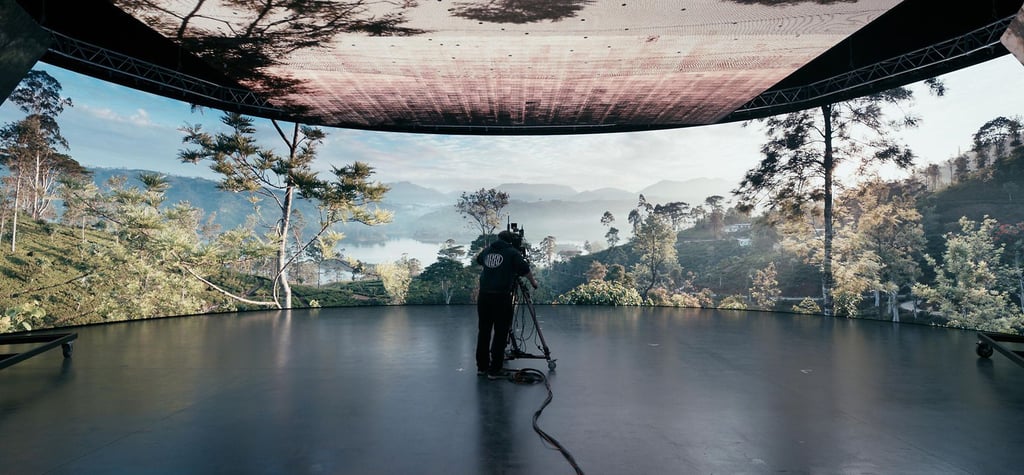
LED VOL production studio
The "Mandalorian Effect": Why This Matters
While VP has existed in various forms for years, it hit the mainstream with The Mandalorian. The impact wasn't just about how the show looked; it was about how it was made.
1. The End of the Lighting Nightmare
One of the biggest flaws of green screens is "spill"—that tell-tale green glow that bounces onto an actor's skin or shiny armor, requiring hours of tedious cleanup in post. In a Volume, the LED walls are the light source. If the digital environment is a sunset over a desert, the actor’s face is naturally bathed in warm, orange light. The reflections on a helmet or a glass window are physically accurate and captured instantly.
2. Empowering the Performer
Acting is about reaction. It is difficult to evoke genuine awe when you are staring at a blank wall. VP restores the actor's environment. When an actor can see the towering cliffs of a fictional planet surrounding them, their performance becomes more grounded and authentic.
3. The Director’s "Magic Wand"
In traditional production, if a director decides they want the sun to be two inches to the left, it's a nightmare for the VFX team later. In Virtual Production, the director can simply tell the digital artist, "Move the sun," and the lighting on the physical set changes in real-time.
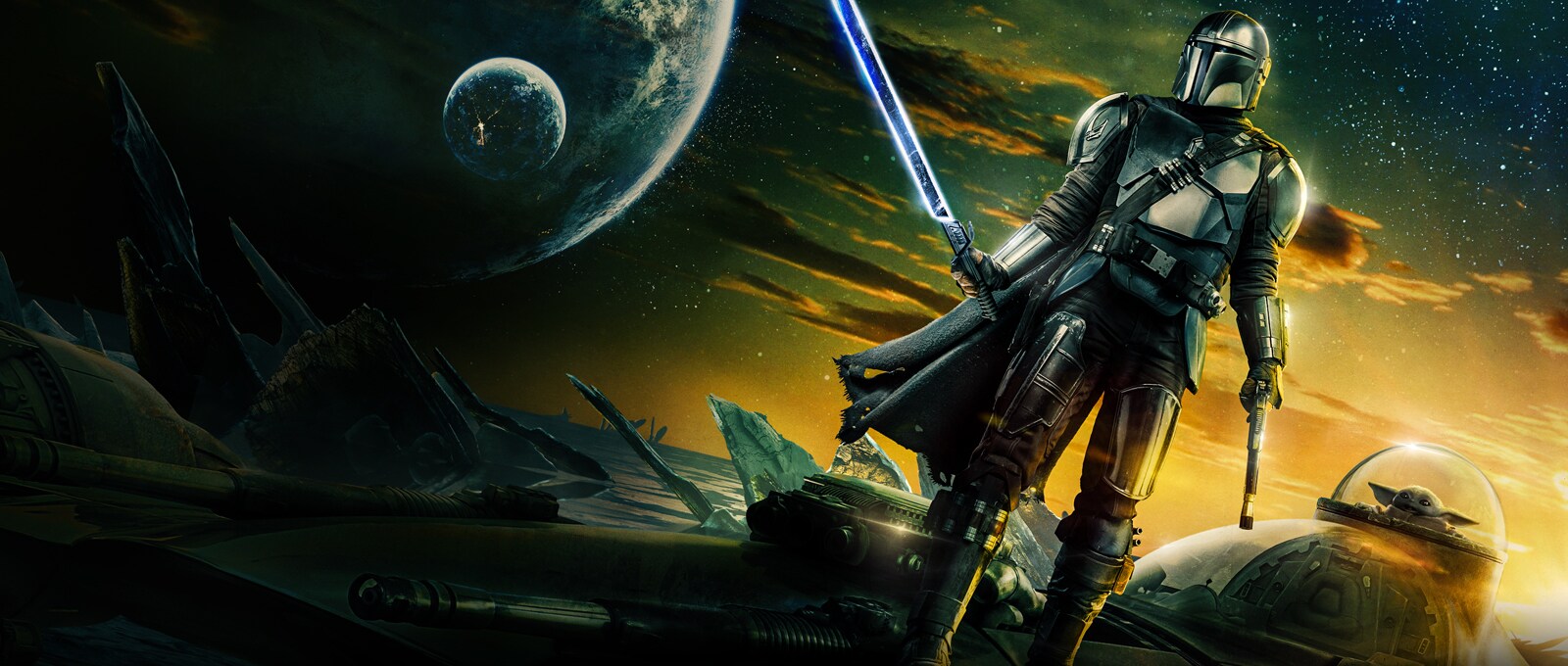

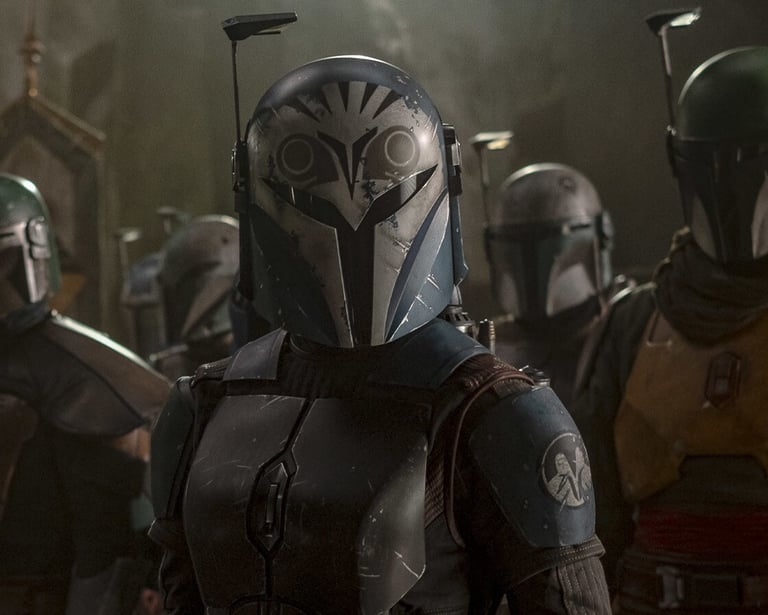
The Mandalorian -- Courtesy of StarWars and Disney.
The Great Flip: Post-Production is Now Pre-Production
The most radical change brought by VP is the timeline of creation. For a century, the workflow was linear:
Script → Shoot → VFX.
Virtual Production flips this. Because the environment must be rendered and ready before the actors step onto the stage, the "post-production" work happens during "pre-production." The digital assets—the mountains, the cities, the alien flora—must be built to a final-pixel standard before Day 1 of filming. This reduces the guesswork and minimizes the costly "fix it in post" mentality that has plagued big-budget cinema.
The Road Ahead: Challenges and Democratization
Virtual Production isn't without its hurdles. The upfront cost of building an LED Volume is staggering, and there is a steep learning curve for crews who must now be as proficient in game engine logic as they are in cinematography.
However, the technology is democratizing rapidly. We are seeing the rise of smaller "boutique" volumes and more efficient software that allows indie filmmakers to achieve "blockbuster" looks on a fraction of the budget. Furthermore, the integration of AI-driven environment generation is beginning to speed up the creation of these digital worlds, making the process even more accessible.
Virtual Production isn't just a fancy new tool; it is a return to the roots of filmmaking. It brings the director, the actor, and the artist back into the same room at the same time. By merging the physical and digital worlds in real-time, we aren't just changing how movies are made—we are expanding the boundaries of what can be imagined on screen.
The green screen isn't dead yet, but it is certainly stepping out of the spotlight. The future of cinema is no longer about imagining the world; it’s about stepping right into it.
Connect
Engaging storytelling through immersive media solutions.
contactus@lm3official.com
+1234567890
© 2026. All rights reserved.

services